Suicide Prevention Month: How QPR Training Turns Bystanders into Lifesavers
September is recognized as Suicide Prevention Month and is an important time to raise awareness and reduce the stigma around mental health to help prevent suicide. Mental health professionals play a large role in suicide prevention but may not always be the first to recognize the signs that someone is struggling. Rather, those closer to the person experiencing a crisis, including friends, family, coworkers, teachers, and neighbors, may notice a change in behavior and have the opportunity to start a conversation.
However, while many may notice the signs that someone is struggling, they may find it difficult to approach the person and start a conversation with them. This is where QPR Suicide Prevention Training comes in. Hearts 4 Minds offers groups the opportunity to learn more about how to prevent suicide and, combined with our H4M Connect resource, can save lives. Discover more about our important training offering and how your company or school can benefit from this training.
What is QPR Suicide Prevention Training?
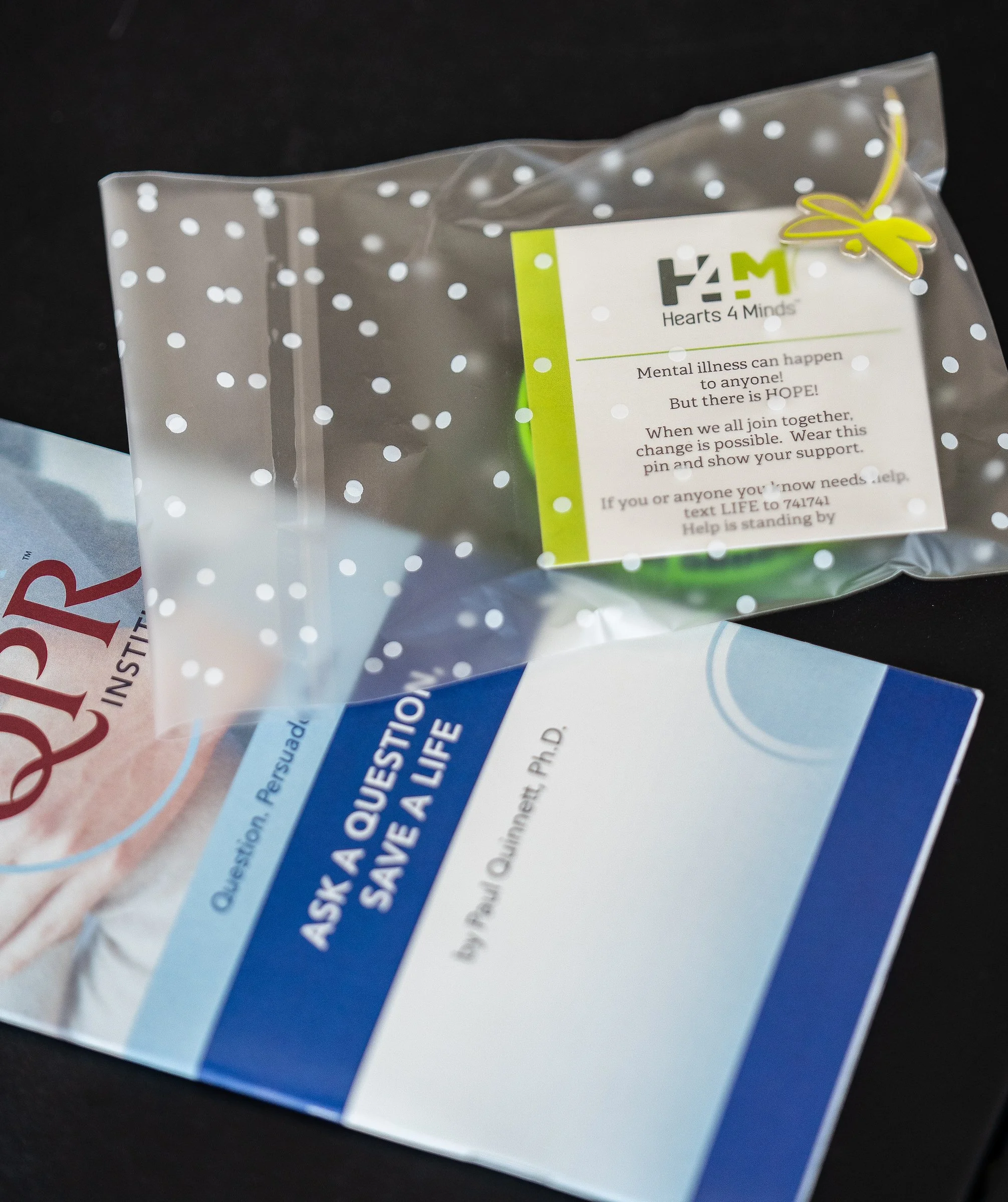
As part of our mission to break down the stigma around mental struggles, Hearts 4 Minds offers the QPR Suicide Prevention Training. These 60-90 minute sessions are available for businesses, community organizations, and schools with a minimum of 10 participants (to a maximum of 35). These presentations are conducted by a trained member of our team and include information about how to spot the signs and symptoms of suicidal thoughts and provide real tools and tips on how to appropriately start a conversation with someone who is at risk.
These interactive sessions walk through and help attendees notice the more subtle signs of mental struggles and provide real life examples on how to navigate these situations. The QPR Suicide Prevention Training sessions are geared towards high school aged attendees or older, but with the permission of an adult, middle school-aged children can also benefit.
What does QPR stand for?
QPR stands for Question, Persuade, and Refer. These three important areas are the guiding light of our training. When we question someone about suicide, we can recognize when someone may be at risk. Our sessions provide the appropriate guidelines on how to create an open environment to encourage an at-risk individual to reach out for help.
The QPR training also teaches somehow how to persuade an individual to ask for and seek help. We discuss various tactics on how to positively persuade at risk individuals to reach out for the help they deserve. Finally, the third component, refer, helps to close the loop to help those at risk find the proper mental health resources for help.
Our QPR training emphasizes that you do not need to be a mental health professional to make a life changing difference for someone. By simply understanding the signs of struggle and acting appropriately to get help for the individual is an important step in saving lives.
Why is it important to ask questions?
A very common misconception is that talking about suicide promotes the idea in someone’s head. However, this is the opposite. Asking someone directly about suicide allows for an honest and open conversation into how someone is truly feeling and what they are experiencing. The QPR training allows attendees to feel more comfortable with opening the conversation and saving a life.
If you notice that someone is becoming increasingly withdrawn, voicing hopelessness, feels like they are burden, or if there is a sudden change in behavior, do not assume that someone else will speak up. Being the first person to have an honest conversation and asking direct questions can be a huge starting point. Starting a conversation is less about asking the perfect question but rather, asking and listening to everything with empathy and an open mind. Remember, you are not expected to become someone’s therapist, but by asking questions and having the proper tools and resources available for someone can provide them with the support they need.
How to Get QPR Trained
Hearts 4 Minds offers free QPR training for local businesses, organizations, and schools with a minimum of 10 attendees. These sessions can help connect people with suicide prevention resources to help them feel more prepared if warning signs are seen. If you are interested in scheduling a session, you can fill out our interest form at the bottom of this page.
Recognizing the signs of mental health struggles and suicide is not limited to only September but is a yearlong effort. Suicide Prevention Month is more about than just raising awareness, but it is a reminder to turn awareness into action.
Anyone can make a difference and knowing how to recognize the warning signs and start a conversation to connect someone with help is the cornerstone behind our QPR Suicide Prevention Training sessions. One interaction and one simple question can open a conversation. This conversation can lead someone to the support they desperately need and can make all of the difference.
Here at Hearts 4 Minds, we are committed to breaking down the stigma that surrounds mental health struggles. Our QPR Suicide Prevention Training provides the tools to give people the courage to empower and help others to prevent another tragedy from occurring.
This September, help us in further spreading our mission by scheduling a QPR training session. You can also explore our volunteer opportunities, wear our merchandise, and donate to Hearts 4 Minds.
If you or someone you know is experiencing a mental health crisis, Text LIFE to 741741. Trained therapists are available 24/7 to assist. You are not alone!